

How 9/11 Changed the American Nervous System
Why fear, hypervigilance, uncertainty, media exposure, and collective trauma can keep shaping behavior long after the original event is over

September 11, 2001 changed more than airport security, foreign policy, and the New York skyline. It changed the emotional atmosphere of the country. For millions of people, the world suddenly felt less predictable. Ordinary places became possible targets. Airplanes became symbols of danger. News coverage became relentless. People learned to scan, anticipate, question, and prepare for threats that had previously felt almost unimaginable. Some of those changes were practical. Some were cultural. Some were psychological. More than two decades later, the event itself is history, but the nervous-system patterns created around fear, uncertainty, loss, and vigilance can still show up in the way people respond to the world.
A Country Learned to Expect the Unexpected
Before 9/11, many Americans lived with a different baseline assumption about safety. That assumption was shattered in a matter of hours. When a large population experiences the same frightening event at the same time, the psychological impact does not simply disappear when the immediate danger ends. People remember where they were. They remember who called them. They remember the television images. They remember the confusion. The brain is designed to learn quickly from danger, and after an event of that magnitude, heightened vigilance becomes understandable. The problem begins when the mind keeps responding to uncertainty as though uncertainty itself is evidence that something bad is about to happen.
The News Became Part of the Nervous System
For days and weeks after 9/11, people watched the same images repeatedly. Planes hitting buildings. Smoke. People running. Buildings collapsing. Missing-person photographs. Breaking-news banners. Threat warnings. For some people, that constant repetition reinforced the emotional response long after the original event had ended. The nervous system does not always distinguish neatly between witnessing danger directly and repeatedly experiencing vivid representations of danger. That is one reason anniversaries, documentaries, old footage, sirens, airplanes, or certain news stories can still produce strong reactions in people who lived through that period.
Hypervigilance Can Become Normal
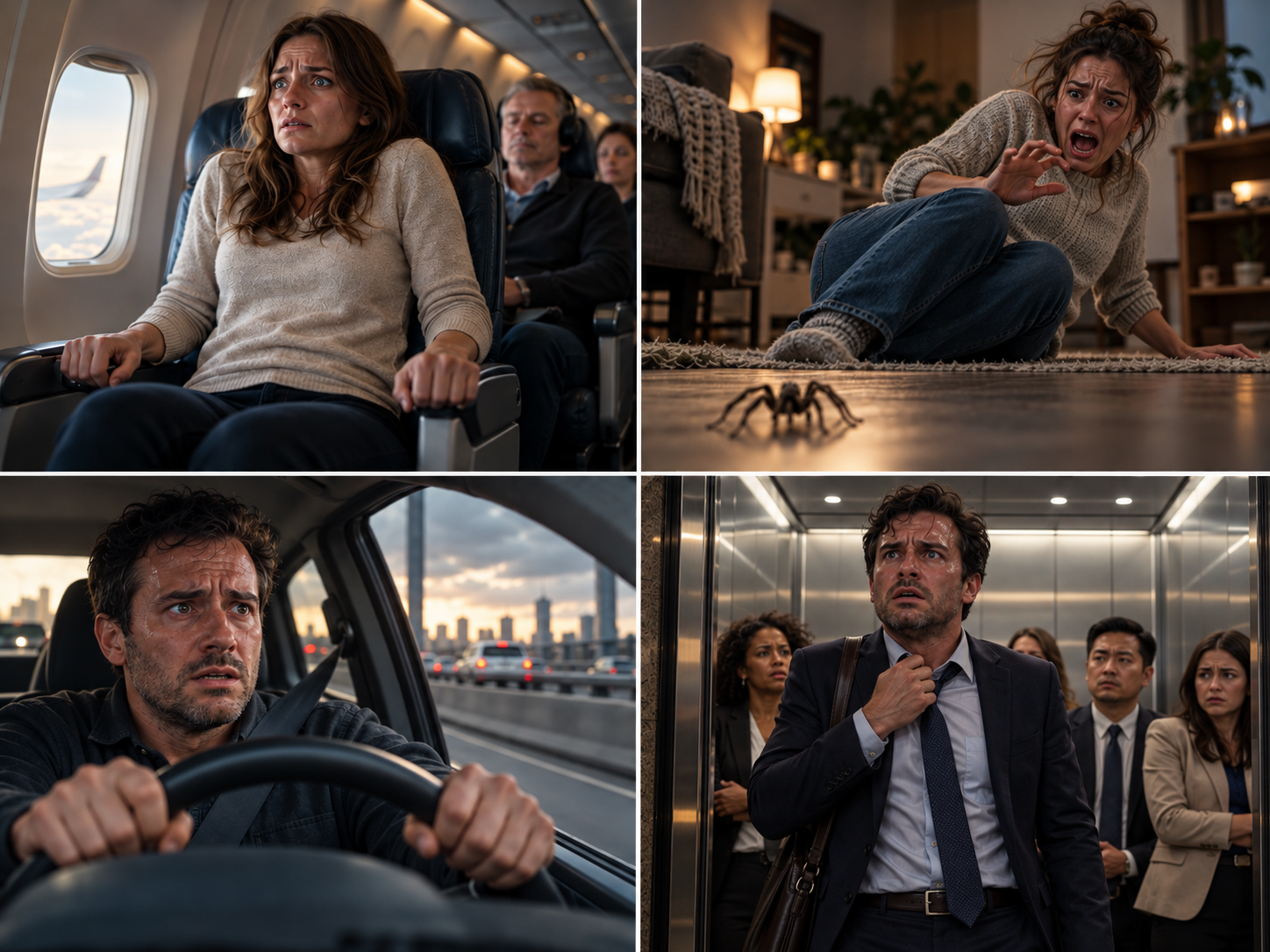
One of the effects of fear is scanning. What is that sound? Who is that person? Is that bag unattended? Is this flight safe? Is something about to happen? In a genuine emergency, that response is useful. The difficulty is that a nervous system can become accustomed to operating at that level of alertness. Over time, vigilance can become a personality feature instead of a temporary state. People begin calling themselves worriers, overthinkers, control freaks, or people who “just need to know what is going on.” Sometimes underneath that identity is simply a nervous system that learned a long time ago that surprise can be dangerous.
Fear Changes Behavior Long After the Threat Is Gone
Fear does not have to remain dramatic to remain influential. It can show up as avoiding flights, checking the news repeatedly, needing excessive control, becoming uncomfortable in crowds, distrusting unfamiliar situations, or feeling uneasy when plans change unexpectedly. The person may no longer connect those behaviors to the original event because the pattern has become normal. This is one of the reasons hypnosis can be useful for certain anxiety and stress patterns. The objective is not to erase history or pretend something terrible did not happen. The objective is to help the nervous system stop responding to the present as though the past is still happening.
Collective Trauma Is Still Personal
We use phrases like “national trauma” because millions of people experienced the same event, but trauma is always processed individually. One person watched from across the country. Another lost someone. Another was working in Manhattan. Another was a firefighter, police officer, medical worker, military member, flight crew member, or child trying to understand why every adult suddenly looked terrified. Those experiences are not interchangeable. What they have in common is that the mind can attach emotion to images, sounds, places, dates, sensations, and meanings. Those associations can remain active years later even when someone consciously believes they have moved on.
September 11 Can Still Trigger People Who Think They Are Fine
Anniversary reactions are real. Someone may feel unusually irritable, heavy, distracted, anxious, or emotional around a meaningful date without immediately understanding why. The calendar itself can become a cue. News coverage increases. Images return. Conversations return. Memories become more available. For most people, that may simply mean reflection or sadness. For others, it may activate anxiety, grief, sleep disturbance, or old stress responses. There is nothing mysterious about that. The brain learns through association, and anniversaries can reactivate those associations.
Hypnosis Is Not About Forgetting
Hypnosis should never be framed as a way to delete 9/11, erase grief, or make someone indifferent to something that mattered. Memory has meaning. Grief has meaning. The goal is different. Hypnosis can help some people change the automatic emotional intensity attached to certain triggers, reduce anticipatory anxiety, interrupt repetitive mental loops, and create more flexibility in how the mind responds to reminders of the past. Remembering something and reliving it are not the same thing.
The World Changed, but the Nervous System Can Change Too
One of the enduring lessons of 9/11 is that life can change without warning. That truth can make people more grateful, more connected, and more aware of what matters. It can also make some people chronically afraid of what might happen next. The difference is not whether uncertainty exists. It always does. The difference is whether the nervous system treats uncertainty as something that can be tolerated or something that must constantly be controlled.
Living After 9/11 Means More Than Remembering It
For people who remember that day, September 11 will always carry weight. It should. But honoring the past does not require living in a permanent state of alarm. Remembering the people who were lost, the people who responded, and the way the country changed can coexist with learning how to live more freely in the present.
The world after 9/11 became more vigilant. For some people, the next step is learning when vigilance is no longer necessary.
Schedule your free hypnosis screening today.